Compare
Sodatide vs Other Probiotic Capsules: Six Questions to Compare Any Label
To compare Sodatide with any probiotic capsule, ask six questions: is a CFU count printed, are strains named, is the count promised through shelf life, how is it stored, what do the fibers add, and what does it cost a day? Sodatide prints storage and price clearly, but no CFU count or strain codes.
Written by the Sodatide editorial teamMedically reviewed by Dr. Pascale Carbonara, MD, PhysicianReview date: Published Last updated · 8 min read

At a glance
Key facts
Searchers type 'Sodatide vs' and then a name, but comparing brands is the wrong frame. Two capsules with the same species can hold very different things. A fair comparison looks at the label, not the logo.
Below are six questions you can put to any probiotic capsule, with Sodatide's answers beside each. They also work on the next product you read about, which is the real value.
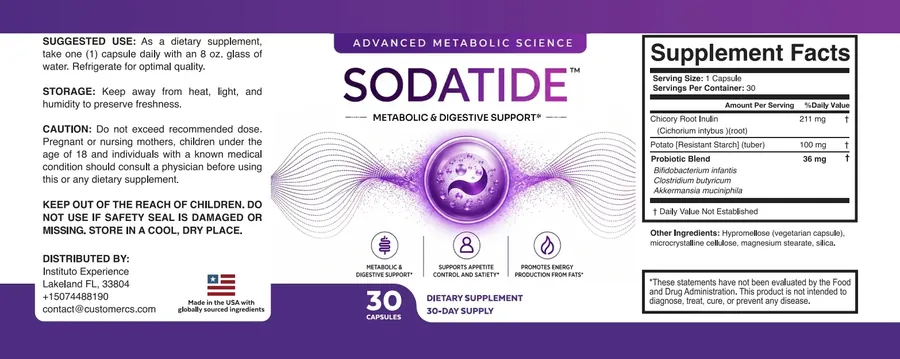
- Sodatide per capsule: chicory inulin 211 mg, potato resistant starch 100 mg, 36 mg probiotic blend of three species.
- Not published: CFU count, strain codes, count through shelf life, Akkermansia form, outside lab report.
- Printed: storage (refrigerate, away from heat, light and humidity), cautions and the distributor.
- Cost: about $1.63 to $2.63 a day, depending on the pack, as listed October 12, 2026.
- Refund: a 60-day window counted from purchase on the sales page, after 30 or more days of use; the buyer pays return postage.
- Food gives fiber in grams. A capsule gives about 0.3 g.
Method
Why compare labels instead of brands?
Because a probiotic is a bundle of specific strains at a specific live count, and a brand name tells you neither. The NIH says probiotic effects are strain-specific, and that a higher count is not necessarily better (NIH ODS Probiotics (HP)). Two products that both say Bifidobacterium can behave differently.
It also helps you ignore marketing. Words like 'advanced' or 'metabolic science' decorate the front of a bottle. The facts sit in the panel.
The test
What are the six questions, and how does Sodatide answer them?
| Question | Why it matters | Sodatide |
|---|---|---|
| 1. Is a CFU count printed? | CFU counts live cells; milligrams include dead ones | Not published (36 mg blend only) |
| 2. Are strains named by code? | Effects and safety are strain-specific | Not published (species only) |
| 3. Is the count promised to the end of shelf life? | Live cells fall over time | Not published |
| 4. How should it be stored? | Heat and damp harm live cells | Printed: refrigerate; away from heat, light, humidity |
| 5. What do the added fibers amount to? | Studies use grams | 211 mg inulin, 100 mg resistant starch |
| 6. What does a day cost, and can you get a refund? | Value includes the exit | $1.63 to $2.63 a day; 60-day window |
Tally it honestly. On questions 4 and 6 Sodatide is clear. On 1, 2 and 3 it is silent, and those three are the heart of a probiotic's dose.
Questions 1 to 3
Why do CFU, strains and shelf life matter most?
Probiotics are dosed in colony-forming units, often 1 to 10 billion per dose according to the NIH (NIH ODS Probiotics (HP)). A label that gives only a weight cannot be matched to a study, because weight includes dead cells. The NIH also advises looking for a count promised to the end of shelf life.
Strain codes matter for safety as well as dose. One B. infantis strain, 35624, eased IBS symptoms at 100 million CFU, but the lower and higher doses in that trial did not (Whorwell 2006 B. infantis 35624 IBS). For Clostridium butyricum, EFSA's view is that safety is strain-related, because a few strains carry a toxin gene (ACNFP C. butyricum TO-A paper).
Sodatide lists species only, so a buyer cannot check any of this. Our CFU explainer goes deeper, and you can ask the brand at [email protected] for the missing numbers.
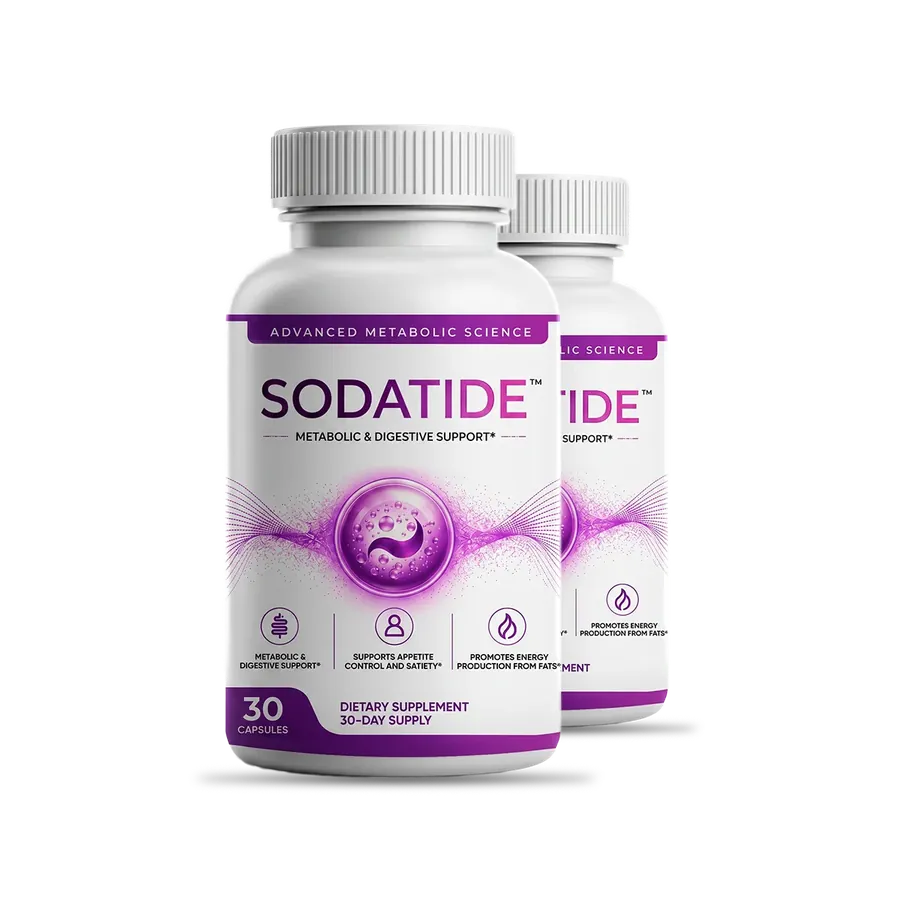
Comparing prices too?Use the sales page for Sodatide's exact pack prices, then set them beside the capsules you are weighing.
See today's price and guaranteeWe are paid a commission when you order through our links. It adds nothing to your bill.
Question 5
What do the fibers add to a probiotic capsule?
Sodatide pairs its bacteria with two prebiotic fibers, which is a design some brands share. The catch is dose. EFSA backed a regularity effect for chicory inulin at 12 g a day (EFSA 2015 chicory inulin claim), and 211 mg is roughly 2% of it. The lowest dose in a review of resistant starch trials was 8 g (Snelson 2019 RS2 meta-analysis), against 100 mg per capsule.
That does not make the fibers useless. It means that, in this capsule, they are a sliver. Food supplies the fiber that counts: adults are advised to aim for about 21 to 38 g a day (MedlinePlus dietary fiber), and Mayo Clinic prefers whole foods to fiber supplements (Mayo Clinic fiber). Our fiber foods vs capsules post covers that in more detail.
Question 6
How do you compare cost fairly?
Convert everything to a cost per day and write down what that buys. Sodatide is about $2.63 a day in the 2-bottle pack, $2.30 in the 3-bottle pack and $1.63 in the 6-bottle pack, before shipping on the smallest pack.
- For the other product, divide its price by the number of days a bottle lasts at the label dose.
- Count shipping and any return postage on both sides.
- Compare the refund terms in writing. Sodatide's refund window runs 60 days and needs a month of use first, with return postage paid by you.
- Compare what is actually printed per capsule, not the length of the claim list.
Cheaper is not better if the label hides the dose, and dearer is not better either. Value means a known dose, a clear storage rule and a refund you can use.
Verdict
Is Sodatide worth it compared with the alternatives?
Worth depends on what you want. In favor: a full label with a named distributor, a vegetarian capsule, one a day, clear storage text and a written money-back window. Against: fibers far below studied doses, no CFU or strains, no outside lab report, and return postage on you.
Is it effective? No trial of the capsule exists to say. If you want a label that prints a live count and strain codes, other products may meet that bar, and you should compare their panels with the six questions above. If you want a simple habit and accept the gaps, Sodatide is a modest option.
Before you buy
What should you do before buying any probiotic?
Check with a doctor or pharmacist first when you are pregnant, nursing, under 18, living with a condition, immune-compromised or on prescription medicine. When immunity is weak, live bacteria add risk (NIH ODS Probiotics (HP)). Read the full panel, not the front. Ask the brand for what is missing. Then give the product a tracked trial and a decision date.
FAQ
Frequently asked questions
How does Sodatide compare with other probiotics?
Use six label questions: CFU printed, strains named, count through shelf life, storage, fiber amounts and cost per day. Sodatide prints storage and price clearly, but it prints no CFU count, no strain codes and no shelf-life count.
Is Sodatide worth it?
It depends on your expectations. It has a full label, one capsule a day and a written 60-day money-back window. Its fibers are far below studied doses, and its probiotic dose is unstated.
Is Sodatide effective?
No trial of the capsule has been published, so effectiveness is unproven. Studies of its ingredients used much larger doses. Judge it yourself with a weekly log and a decision by day 45.
Is Sodatide a better probiotic than others?
We cannot say. Without a CFU count and strain codes, its live dose cannot be compared with any study or product. Compare the panels, not the brands.
What is a probiotic appetite suppressant?
It is a marketing phrase. Probiotic trials taken together show an average weight change near 0.6 kg, which the NIH calls of questionable clinical significance (NIH ODS Probiotics (HP)). The front of Sodatide's bottle claims only 'Metabolic & Digestive Support*'.
Where can I see Sodatide's price and reviews?
Prices are on the official sales page and our pricing page: about $1.63 to $2.63 a day. We publish no star ratings or quotes, because none have been matched to real orders.
The short verdict
Our view
Comparing probiotics is mostly an exercise in noticing what a label leaves out. Sodatide leaves out the three numbers that matter most for a probiotic, and it fills the rest of the page with honest storage, caution and price information.
Our rule of thumb: no CFU, no strain codes, no strong claim. That does not make Sodatide bad. It makes it a product to try cautiously, for a limited time, with eyes open. Use the six questions on anything else you consider, and let the answers, not the advertising, make the call.
Sodatide is a dietary supplement. It is not FDA approved, and no dietary supplement is. These statements have not been evaluated by the Food and Drug Administration, and the product is not intended to diagnose, treat, cure or prevent any disease. If you have a medical condition, take medicine or are unsure, talk to your doctor or pharmacist first.
Compare first, then decideIf Sodatide still fits your list, the sales page shows today's price and guarantee.
See today's price and guaranteeWe are paid a commission when you order through our links. It adds nothing to your bill.