Food first
Fiber Foods vs Fiber Capsules: How to Reach 21 to 38 Grams a Day
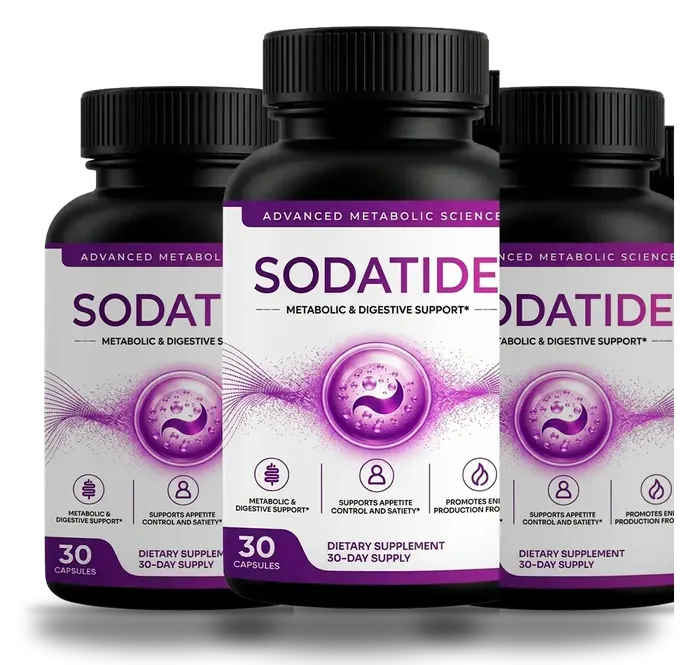
Adults need about 21 to 38 grams of fiber a day, and Mayo Clinic says whole foods are generally better than fiber supplements (MedlinePlus dietary fiber) (Mayo Clinic fiber). One Sodatide capsule has about 0.3 grams of fiber from 211 mg of inulin and 100 mg of resistant starch. Half a cup of cooked lentils gives roughly 8 grams. Food does the real work.
Written by the Sodatide editorial teamUpdated · 8 min read

The target
How much fiber do adults need each day?
Adults need about 21 to 38 grams of fiber a day, according to MedlinePlus (MedlinePlus dietary fiber). The exact target depends on age and sex.
| Group | Age 50 or younger | Over 50 |
|---|---|---|
| Women | 25 g a day | 21 g a day |
| Men | 38 g a day | 30 g a day |
Those are the figures Mayo Clinic gives (Mayo Clinic fiber). Many adults eat well below them. The 2025-2030 Dietary Guidelines for Americans favor fiber-rich whole grains, vegetables and fruit, and suggest 2 to 4 servings of whole grains a day (Dietary Guidelines 2025-2030).
Everyday foods
Which foods have the most fiber per serving?
Beans, lentils, berries and whole grains top the list. The table gives rounded, typical values; exact amounts vary by brand, variety and how the food is cooked.
| Food | Serving | Fiber, about |
|---|---|---|
| Lentils, cooked | 1/2 cup | 8 g |
| Black beans, cooked | 1/2 cup | 7 to 8 g |
| Raspberries | 1 cup | 8 g |
| Pear, with skin | 1 medium | 5 to 6 g |
| Broccoli, cooked | 1 cup | 5 g |
| Apple, with skin | 1 medium | 4 g |
| Oatmeal, cooked | 1 cup | 4 g |
| Baked potato, with skin | 1 medium | 4 g |
| Almonds | 1 ounce (about 23 nuts) | 3 to 4 g |
| Whole-wheat bread | 1 slice | 2 to 3 g |
| Sodatide | 1 capsule | About 0.3 g |
Keep the skin on fruit and potatoes where you can. Much of the fiber sits in or just under it.
The math
How does one Sodatide capsule compare with fiber from food?
One capsule gives about 0.3 grams of fiber: 211 mg of chicory root inulin plus 100 mg of potato resistant starch. Half a cup of lentils gives about 26 times as much.
The studies on these two fibers also used grams. EFSA accepted a regularity effect for chicory inulin only at 12 grams a day (EFSA 2015 chicory inulin claim), which is about 57 capsules. Resistant starch trials used about 6 to 66 grams a day (Pugh 2023 RS glycemic meta-analysis) (Snelson 2019 RS2 meta-analysis).
The capsule is not a fiber source in any practical sense. It may suit people who want a daily prebiotic and probiotic habit, but your daily grams have to come from meals. The full story is in inulin grams vs milligrams.
Why food wins
Why are whole foods better than fiber supplements?
Mayo Clinic says that, in general, whole foods are better for you than fiber supplements (Mayo Clinic fiber). Foods bring many kinds of fiber at once, plus vitamins, minerals and other nutrients a capsule does not.
- Variety: beans, oats, fruit and vegetables each carry different fibers that feed different gut bacteria.
- Fullness: fiber-rich meals take longer to chew and eat.
- Scale: a single bowl of bean chili can supply a third of a day's target.
- Cost: dried beans, oats and frozen vegetables are among the cheapest foods in the store.
The Dietary Guidelines say vegetables, fruits, fermented foods and high-fiber foods support a diverse gut microbiome (Dietary Guidelines 2025-2030). Yogurt and kefir with live cultures are easy ways to add fermented foods.
A sample day
What does a 30-gram fiber day look like?
About 30 grams fits into three ordinary meals and one snack. The sample below uses rounded values from the food table.
| Meal | Food | Fiber, about |
|---|---|---|
| Breakfast | 1 cup oatmeal with 1/2 cup raspberries | 8 g |
| Lunch | Salad with 1/2 cup black beans and an apple | 11 to 12 g |
| Snack | 1 ounce of almonds | 3 to 4 g |
| Dinner | 1 cup broccoli and a baked potato with skin | 9 g |
| Total | About 31 to 33 g |

Swap in foods you like. Frozen fruit, canned beans (rinsed) and whole-grain pasta all count.
Go slow
How fast should you add fiber to your diet?
Add fiber over a few weeks, not in one day. Mayo Clinic and MedlinePlus both say a sudden jump can cause gas, bloating and cramps, and that a gradual increase lets gut bacteria adjust (Mayo Clinic fiber) (MedlinePlus dietary fiber).
- Week 1
Add one higher-fiber food a day, such as oatmeal at breakfast or fruit with the skin on.
- Week 2
Add a half cup of beans or lentils a few times a week. Swap white bread for whole-wheat.
- Week 3
Add vegetables to lunch and dinner. Keep a handful of nuts for snacks.
- Week 4 and on
Check your total against your target. Hold steady if your gut feels unsettled.
Inulin at gram doses is a known cause of gas and bloating; a study found up to 10 grams a day was well tolerated in healthy young adults (Bonnema 2010 inulin GI tolerance). Inulin is a type of fructan, and fructans are high-FODMAP foods that can trigger IBS symptoms (Monash FODMAP high/low foods). If onion, garlic or wheat bother you, add fiber from low-FODMAP sources first.
Water
How much water should you drink with more fiber?
MedlinePlus suggests about 8 glasses of fluid a day when you eat more fiber (MedlinePlus dietary fiber). Fiber holds water in the gut; without enough fluid, more fiber can make stools harder rather than softer.
Spread drinks through the day. Sodatide's label asks for one capsule daily with an 8 oz. glass of water, which counts toward the total.
Unplanned weight loss, ongoing belly pain, blood in the stool or a big change in bowel habits needs a doctor. Do not try to fix these with fiber or supplements.
The verdict
Where does a capsule like Sodatide fit in a high-fiber diet?
At most, a capsule is a small daily extra on top of a fiber-rich diet. It cannot replace beans, oats, vegetables and fruit, and it is not a treatment for constipation, IBS or any disease.
If you choose Sodatide, take it as the label says and judge it on what the label claims, not on fiber grams. The two fibers are covered on the chicory root inulin page and the resistant starch page, and the gut health guide has more food ideas.
FAQ
Fiber foods and capsule questions
How much fiber is in one Sodatide capsule?
About 0.3 grams: 211 mg of chicory root inulin plus 100 mg of potato resistant starch. Adults need about 21 to 38 grams of fiber a day (MedlinePlus dietary fiber), so one capsule supplies around 1% of a typical target.
Can a fiber capsule replace eating vegetables?
No. Mayo Clinic says whole foods are generally better than fiber supplements (Mayo Clinic fiber), and a capsule has a tiny fraction of a serving's fiber. Vegetables also bring vitamins, minerals and many fiber types.
What food has the most fiber?
Beans and lentils are among the richest everyday sources, at roughly 7 to 8 grams per half cup cooked. Raspberries give about 8 grams per cup. Whole grains, pears and broccoli are also strong choices.
Why do I feel bloated after adding fiber?
Gut bacteria ferment fiber and make gas, especially after a fast increase. MedlinePlus says this often eases as bacteria adjust and advises adding fiber over a few weeks with plenty of fluid (MedlinePlus dietary fiber).
Do I need more water when I eat more fiber?
Yes. MedlinePlus suggests about 8 glasses of fluid a day (MedlinePlus dietary fiber). Fiber absorbs water, so drinking too little can leave stools hard and make you feel worse.
Is 30 grams of fiber a day too much?
For most adults, no. It sits inside the 21 to 38 gram range MedlinePlus gives (MedlinePlus dietary fiber). Build up over a few weeks. People with IBS or a gut condition should ask a doctor about the right amount.
Does Sodatide count toward my daily fiber goal?
Only slightly. One capsule adds about 0.3 grams. Count it if you like, but plan your fiber around meals: one apple with the skin gives more than ten capsules.
Who wrote this
Written and reviewed by
Plain-language pages built from the bottle label, the order page and linked public health sources such as NIH, FDA and CDC.
Last updated . Read our editorial standards and how we check reviews. This website is run by a U.S. retail desk for Sodatide, not by the manufacturer. We are paid a commission when you buy through our order links.
Keep reading
More about Sodatide
Gut health guide
How much fiber you need, prebiotics vs probiotics, the best food sources and the gut signs that need a doctor.
Read more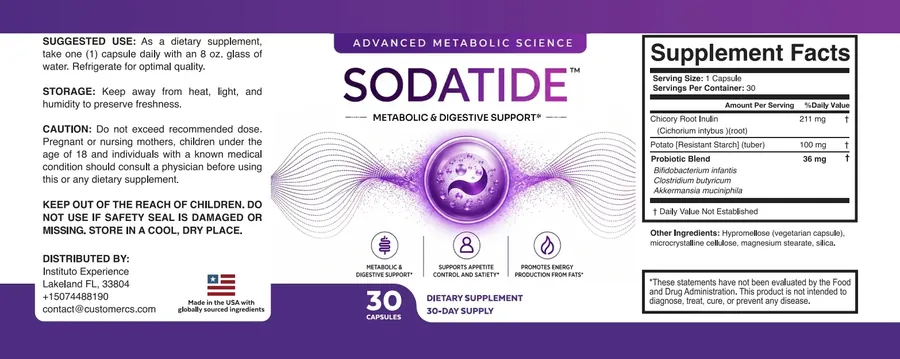
Chicory root inulin
Sodatide's largest ingredient, 211 mg of chicory inulin, next to the 5 to 12 grams a day used in studies.
Read more
Inulin: grams vs milligrams
Sodatide's 211 mg of inulin next to EFSA's 12 grams, the weight meta-analysis, tolerance and inulin-rich foods.
Read moreLicensed U.S. retail desk for Sodatide
Ready to try Sodatide?
Pick a pack. One capsule a day; every pack covers the whole 60-day window.
- Secure checkout
- 60-day money-back window
- Free U.S. shipping on 3+ bottles