Ingredient research
Akkermansia in Sodatide: What the Research Actually Shows
The main human study of Akkermansia was a 2019 pilot with 32 completers taking 10 billion cells a day. The pasteurized form improved insulin sensitivity; weight change was not significant, and the live form changed few markers. Sodatide lists Akkermansia in a 36 mg blend, at most 12 mg, with no cell count and no form stated.
Written by the Sodatide editorial teamUpdated · 9 min read
On the label
How much Akkermansia is in Sodatide?
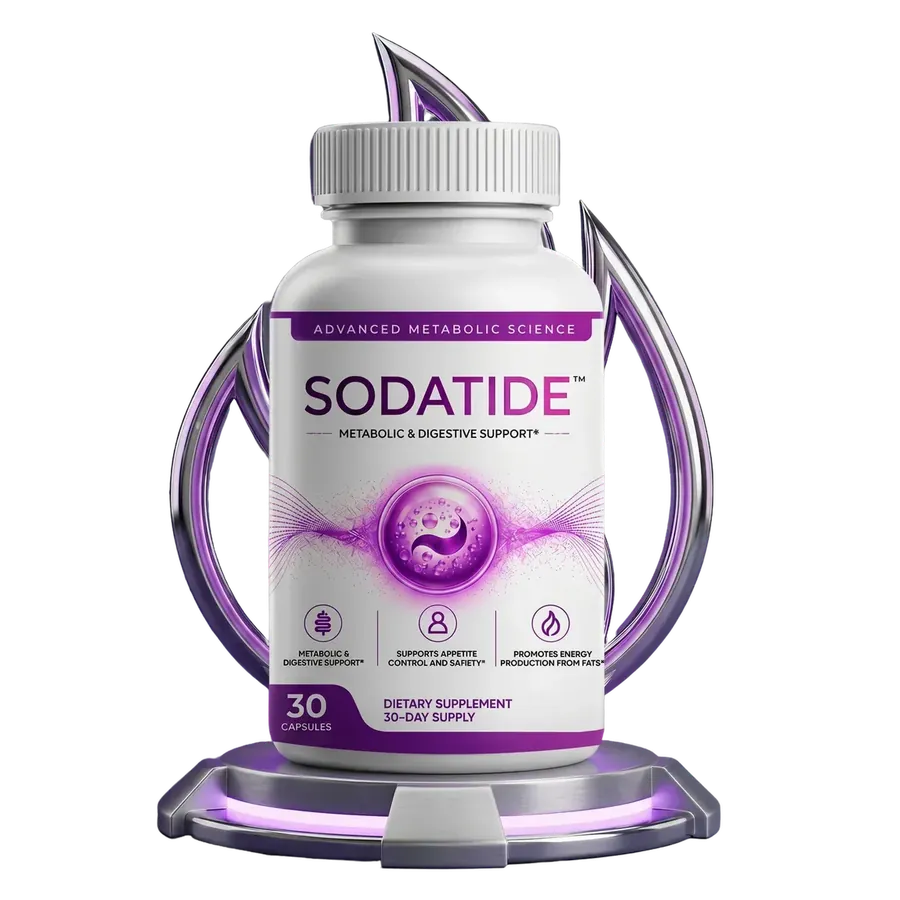
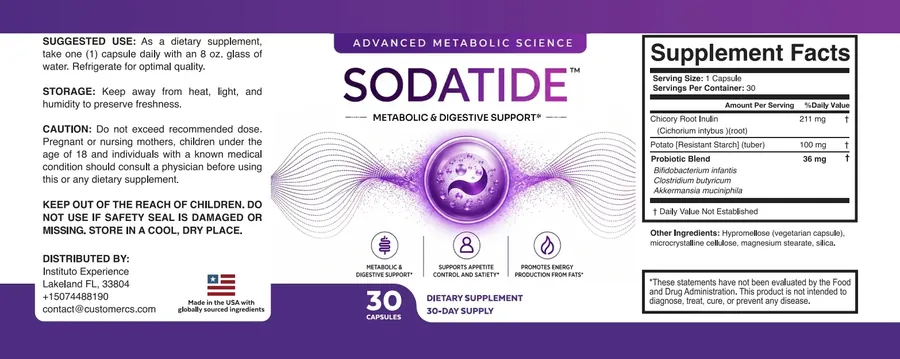
The label does not say. Akkermansia muciniphila is the third of three bacteria in a 36 mg probiotic blend, and only the blend total is printed.
FDA rules let a blend show one total weight, as long as its parts are listed from most to least by weight (FDA labeling guide ch. IV). That order gives a ceiling. The third ingredient can weigh at most one third of 36 mg, so Akkermansia is at most 12 mg.
That ceiling is weight, not live cells. Milligrams include dead cells and carrier material, so they cannot be turned into a cell count (NIH ODS Probiotics (HP)). The research below was dosed in cells, so a direct comparison is not possible.
The full panel and the other four ingredients are on the Sodatide Supplement Facts page.
The bacterium
What is Akkermansia muciniphila?
Akkermansia muciniphila is a gut bacterium that lives in the mucus layer lining the intestine. Its name means "mucus-loving", because it feeds on that mucus.
Researchers have studied it for its possible role in blood sugar and body weight. Interest in a gut bacterium is not proof that taking it helps. That step needs human trials, and very few exist.
It is also an unusual probiotic. Most familiar strains are Lactobacillus or Bifidobacterium. Akkermansia is newer to supplements, and how well it survives outside the gut is still debated (Machado 2020 Akkermansia oxygen/GI survival). More background sits on the Akkermansia ingredient page.
The 2019 pilot
What did the 2019 Akkermansia pilot study find?
The 2019 pilot found that pasteurized Akkermansia improved insulin sensitivity by about 29% over placebo, while weight change was not significant (Depommier 2019 Nat Med Akkermansia pilot). It was published in Nature Medicine and is still the main human study.
Forty adults with overweight or obesity and insulin resistance enrolled. Thirty-two finished: 11 on placebo, 12 on pasteurized bacteria and 9 on live bacteria. Each active group took 10 billion cells a day for 3 months.
| Measure | Change vs placebo | Statistically significant? |
|---|---|---|
| Insulin sensitivity | Up about 29% | Yes |
| Fasting insulin level | Down about 34% | Yes |
| Total cholesterol | Down about 9% | Yes |
| Body weight | Down about 2.3 kg | No |
| Fat mass | Down about 1.4 kg | No |
| Hip size | Down about 2.6 cm | No |
"Not significant" means the weight changes could have been chance in a group this small. The study was safe and well tolerated. It was exploratory, and several authors hold patents or co-founded a company developing the bacterium.
In plain numbers
The Akkermansia pilot at a glance
Two forms
Is pasteurized or live Akkermansia better?
In the 2019 pilot, the pasteurized form did better. Live bacteria did not significantly change most of the markers measured (Depommier 2019 Nat Med Akkermansia pilot).
Pasteurized means heat-treated so the cells are no longer alive. That sounds backward for a probiotic, but in this study the inactive cells worked better on insulin. The study was too small to explain why.
- Pasteurized form: better insulin results in one small pilot, and a safety review from EFSA.
- Live form: fewer measured changes, and no EFSA safety view.
- Survival of live cells in air and storage is debated in lab studies (Machado 2020 Akkermansia oxygen/GI survival).
- Sodatide's label does not say which form it contains.
The label also says "Refrigerate for optimal quality", which hints at live cultures. That is a guess, not a fact. Only the brand can confirm the form.
Safety review
What did EFSA say about Akkermansia safety?
EFSA judged pasteurized Akkermansia safe for adults at up to 34 billion cells a day (EFSA 2021 pasteurised Akkermansia). That 2021 opinion approved it as a novel food in the EU, for food supplements and special medical foods.
The opinion has firm limits. It excludes pregnant and breastfeeding women. It applies only when live cells are almost absent, below 10 CFU per gram. It says nothing at all about live Akkermansia.
If Sodatide uses live Akkermansia, the EFSA safety view does not cover it. If it uses the pasteurized form, the 34 billion cell limit would apply, but the label prints no cell count to check against.
EFSA reviews European foods. In the U.S., the FDA does not approve supplements before sale, and makers are responsible for safety (FDA 101 Dietary Supplements).
The gaps
What does the Sodatide label not say about Akkermansia?
The label leaves out the four details that would link its Akkermansia to the research. Each one is a fair question for the brand at [email protected].
Cell count
The pilot used 10 billion cells a day. The label prints 36 mg for the whole blend and no CFU.
Live or pasteurized
The two forms gave different results, and EFSA reviewed only one.
Count at expiry
NIH advises looking for CFU guaranteed through the end of shelf life (NIH ODS Probiotics (HP)).
- 1Chicory root inulinChicory Root Inulin (Cichorium intybus)(root) · printed amount
- 2Potato resistant starchPotato (Resistant Starch) (tuber) · printed amount
- 3Bifidobacterium infantisBifidobacterium infantis · in blend
- 4Clostridium butyricumClostridium butyricum · in blend
- 5Akkermansia muciniphilaAkkermansia muciniphila · in blend
Listed in label order, from most to least by weight, inside one 36 mg proprietary blend per serving.
No study has tested Sodatide or its blend. Our guide to reading CFU on probiotic labels explains what a complete label shows.
Bottom line
What does the Akkermansia research mean for Sodatide buyers?
The research is early and promising, mostly for the pasteurized form and for insulin, not weight. It cannot be applied to Sodatide, because the label gives no count, form or strain.
Treat the Akkermansia in Sodatide as an unknown amount of a bacterium with one small human pilot behind it. Sodatide is a dietary supplement, not a treatment for diabetes, insulin resistance or obesity.
Probiotics carry a small infection risk in people who are seriously ill or have a weakened immune system (NIH ODS Probiotics (HP)). EFSA's review also excluded pregnancy and breastfeeding. If either applies to you, or you take diabetes medicine, speak with your doctor before you start.
If you try it, keep the bottle in the fridge as the label suggests, take one capsule a day, and judge it on how you feel over several weeks.
FAQ
Akkermansia questions
How much Akkermansia is in a Sodatide capsule?
At most 12 mg, by label math. Akkermansia is third in a 36 mg blend listed by weight (FDA labeling guide ch. IV). The label prints no CFU count, so the number of live or pasteurized cells is unknown. The 2019 pilot used 10 billion cells a day (Depommier 2019 Nat Med Akkermansia pilot).
Did the Akkermansia pilot find weight loss?
Not clearly. In the 2019 pilot, pasteurized Akkermansia lowered weight by about 2.3 kg compared with placebo, but the change was not statistically significant (Depommier 2019 Nat Med Akkermansia pilot). The clear result was better insulin sensitivity. Larger trials are needed.
Is Akkermansia safe to take?
EFSA judged the pasteurized form safe for adults at up to 34 billion cells a day (EFSA 2021 pasteurised Akkermansia), excluding pregnancy and breastfeeding. It gave no view on live Akkermansia. The 2019 pilot reported it was well tolerated (Depommier 2019 Nat Med Akkermansia pilot).
Is Sodatide's Akkermansia live or heat-killed?
The label does not say. The two forms gave different results in research, and EFSA's safety review covered only pasteurized cells (EFSA 2021 pasteurised Akkermansia). Ask the brand at [email protected] which form and strain it uses, and how many cells each capsule holds.
How long did the Akkermansia study last?
Three months. Adults took 10 billion cells a day of live or pasteurized Akkermansia, or a placebo (Depommier 2019 Nat Med Akkermansia pilot). Forty enrolled and 32 finished, which makes it a small pilot study, not proof.
Why does Sodatide need to be refrigerated?
The label says "Refrigerate for optimal quality" and to keep it away from heat, light and humidity. The label does not explain why. Keep the closed bottle in the fridge and check the expiry date.
Who wrote this
Written and reviewed by
Plain-language pages built from the bottle label, the order page and linked public health sources such as NIH, FDA and CDC.
Last updated . Read our editorial standards and how we check reviews. This website is run by a U.S. retail desk for Sodatide, not by the manufacturer. We are paid a commission when you buy through our order links.
Keep reading
More about Sodatide
Akkermansia muciniphila
One 32-person pilot, a pasteurized form, and an EFSA safety opinion. What it means for Sodatide's unstated Akkermansia.
Read more
Probiotic labels and CFU
CFU vs milligrams, strain codes, end-of-shelf-life counts and storage, using Sodatide's 36 mg blend as the worked example.
Read moreChoosing a probiotic
A six-point checklist for any probiotic label, with a fair scorecard for Sodatide.
Read moreLicensed U.S. retail desk for Sodatide
Ready to try Sodatide?
Pick a pack. One capsule a day; every pack covers the whole 60-day window.
- Secure checkout
- 60-day money-back window
- Free U.S. shipping on 3+ bottles