Safety screen
Who Should Skip Sodatide or Ask a Doctor First? A Five-Question Screen
Skip Sodatide, or ask a doctor first, if you are pregnant or nursing, under 18, have a known medical condition, a weak immune system or serious illness, take prescription medicine, or have IBS that flares with fiber. The likely side effect is mild gas. Lasting belly pain or blood in the stool calls for a doctor.
Written by the Sodatide editorial teamMedically reviewed by Dr. Pascale Carbonara, MD, PhysicianReview date: Published Last updated · 8 min read

At a glance
Key facts
A capsule of fiber and bacteria sounds harmless, and for many healthy adults it probably is. The trouble is that the label itself lists groups who should speak to a physician first, and one of its ingredients is live bacteria.
So here is a plain screen. Five questions, each with the reason behind it, then what to expect in your gut, when to stop, and what to bring to an appointment. It is general information, not medical advice.
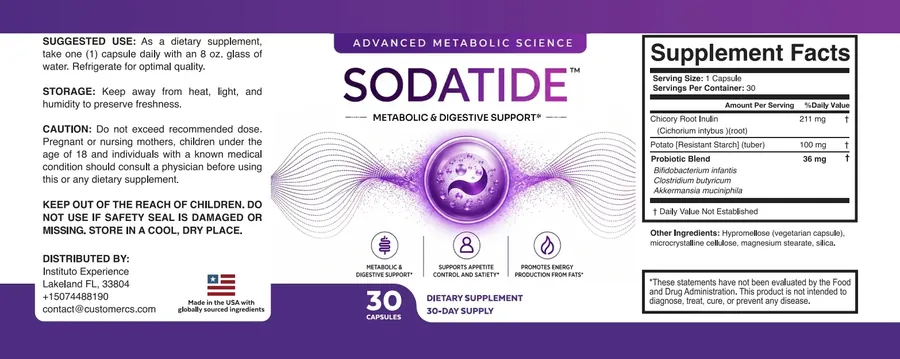
- On the label, three groups are told to see a physician before use: pregnant or nursing mothers, children under 18, and people with a known medical condition.
- Serious infections from probiotics are rare and have been seen mostly in people who were very ill or whose immune systems were weak.
- The most likely effect of added fiber is mild gas or bloating, usually in the first days.
- Inulin is a fructan, and fructans can trigger symptoms in people with IBS.
- No study has tested Sodatide with any medicine.
- Stop and call a doctor for blood in the stool, ongoing belly pain, fever with low immunity, swelling or trouble breathing.
Why bother
Why does a fiber and probiotic capsule need a screen?
Because 'natural' is not the same as 'safe for everyone'. Two of the five ingredients are fibers that gut bacteria ferment, and three are live or once-live bacteria. A supplement is also not checked by the FDA before it is sold (FDA 101 Dietary Supplements).
The label's caution is written for exactly this reason. The wording on the bottle is plain: pregnant or nursing mothers, children under 18 and people with a known medical condition should talk to a physician before using this or any dietary supplement. The five questions below turn that caution into a checklist.
The screen
What are the five screening questions?
1. Are you 18 or older?
The label is aimed at adults. For anyone under 18, it says to see a physician first. The FDA has also warned about probiotics given to hospitalized preterm infants (FDA 2023 probiotics preterm infants).
2. Are you pregnant or nursing?
The label says to consult a physician. EFSA's safety opinion on pasteurized Akkermansia left out pregnant and breastfeeding women (EFSA 2021 pasteurised Akkermansia), and the label never says which form is in the capsule.
3. Is your immune system weak, or are you seriously ill?
Think chemotherapy, transplant medicines, a hospital stay, a central line or recent major surgery. Rare bloodstream infections from probiotics have occurred mostly in these groups (NIH ODS Probiotics (HP)).
4. Do you live with a medical condition or take a prescription?
The label asks you to speak with a physician. No study covers Sodatide with any medicine, and the FDA notes supplements can interact with medicines (FDA 101 Dietary Supplements).
5. Does fiber upset your IBS?
Inulin is a fructan, a type of FODMAP (Monash FODMAP high/low foods). The dose is small, but sensitive people react to different amounts.
One 'yes' on questions 2 to 5 means a conversation with a doctor or pharmacist before the first capsule. A 'no' on question 1 means the same.
Summary
Which groups should ask first, and why?
| Group | Reason | Source |
|---|---|---|
| Pregnant or nursing | Named on the label; EFSA review excluded pregnancy | Label, EFSA |
| Under 18 | Named on the label | Label |
| Weak immunity or serious illness | Rare serious probiotic infections occur in these groups | NIH |
| Known medical condition | Named on the label | Label |
| Prescription medicine | Interactions are possible; no Sodatide study exists | FDA |
| IBS that flares with fructans | Inulin is a high-FODMAP fiber | Monash |

Passed the screen and still curious?The sales page lists the packs, the shipping terms and the 60-day money-back policy.
See today's price and guaranteeWe are paid a commission when you order through our links. It adds nothing to your bill.
Your gut
Does Sodatide cause diarrhea, gas or bloating?
It can cause mild gas or bloating, and rarely cramps or looser stools. Fermentable fibers make gas by design. A controlled trial of chicory inulin found flatulence the most common complaint, with bloating next (Bonnema 2010 inulin GI tolerance).
Context matters: those volunteers took 5 or 10 grams of inulin at once. A Sodatide capsule holds 211 mg, about 4% of the smaller dose, so many people may notice nothing. Resistant starch causes bloating, gas, cramps, constipation or diarrhea at 10 to 30 g a day (Hanes 2022 RS blend trial), and the capsule has 100 mg.
What is more likely to cause trouble is a sudden jump in food fiber at the same time. MedlinePlus says the gas that follows extra fiber often settles as the gut gets used to it (MedlinePlus dietary fiber). Take the capsule with the full glass of water the label asks for, and add food fiber slowly.
Sensitive guts
What about IBS and low-FODMAP diets?
If your IBS reacts to fructans such as those in onion, garlic and wheat, inulin can do the same. Monash University lists fructans among the FODMAPs that can trigger symptoms (Monash FODMAP high/low foods). One capsule is small next to a serving of onion, but nobody can predict your threshold.
On a low-FODMAP plan? Check with your doctor or dietitian before you begin. If you try it anyway, start with a single capsule and stop if your symptoms flare. A probiotic capsule is not a treatment for IBS or any disease.
Warning signs
Which symptoms mean you should stop and call a doctor?
- Blood in your stool, belly pain that lingers, or a marked change in bowel habits that does not settle. These need a medical visit, not a supplement.
- Unplanned weight loss, or an appetite that stays low.
- Fever and chills if your immunity is low.
- A swollen face, lips or throat, hives, or trouble breathing: seek urgent care.
After you have told your doctor, you can report a reaction to the FDA. The company must pass serious reports on to the FDA within 15 days (FDA 101 Dietary Supplements). Keep the bottle and note the lot code.
The visit
What should you bring to the appointment?
A photo of the full label, including the Supplement Facts panel, the caution box and the distributor line. A list of every prescription and supplement you take. A note of any gut symptoms and when they happen.
Ask three things: is a live probiotic safe for me, does it fit with my medicines, and how much fiber should I get from food. Then decide, and keep a check date on your calendar before the 60-day window closes.
FAQ
Frequently asked questions
Is Sodatide safe to take?
In most healthy adults the likeliest effect is mild gas. The label names three groups who should see a physician first: pregnant or nursing mothers, anyone under 18 and anyone with a known condition. Probiotics add extra risk for people with low immunity (NIH ODS Probiotics (HP)).
Does Sodatide cause diarrhea?
Rarely. Fermentable fibers can cause loose stools in some people, but the capsule holds only 211 mg of inulin and 100 mg of resistant starch, far below the gram doses in studies. If symptoms are strong or will not clear, stop and phone a doctor.
What are the side effects of Sodatide?
The most likely are mild gas or bloating in the first days. People with weak immunity face a different risk from the live bacteria, so they should ask a doctor first.
Can I take Sodatide every day?
Daily use is what the directions describe: one capsule with an 8 oz. glass of water. If you have a health condition or take medicine, get a doctor's okay before starting.
Is Sodatide good for you?
That depends on you. It is a small fiber and probiotic add-on, not a treatment, and no trial of it exists. Food fiber does far more. Treat it as optional and judge it over weeks.
Can people with IBS take Sodatide?
Some may, with care. Inulin belongs to the fructans, which are known IBS triggers for some people (Monash FODMAP high/low foods). Ask your doctor or dietitian first, start with one capsule and stop if symptoms flare.
The short verdict
Our view
For a healthy adult with no medicines, Sodatide looks like a low-risk, low-impact capsule, with gas as the main thing to watch. The people for whom it is not simple are those the label names, plus anyone with low immunity or an IBS that reacts to fiber.
That is why we start with a screen. A minute spent on five questions costs nothing, and a doctor or pharmacist can answer the rest. If you are unsure about any one of them, wait. The capsule will still be there after the conversation.
Sodatide is a dietary supplement. It is not FDA approved, and no dietary supplement is. These statements have not been evaluated by the Food and Drug Administration, and the product is not intended to diagnose, treat, cure or prevent any disease. If you have a medical condition, take medicine or are unsure, talk to your doctor or pharmacist first.
Only after the screenIf all five answers are fine and your doctor agrees, the sales page shows today's price and guarantee.
See today's price and guaranteeWe are paid a commission when you order through our links. It adds nothing to your bill.